Quite possibly the best thing about Ecuador is the mix of outdoor adventure and hedonistic pleasure. Preferably in the same day.
Saturday 1. Rise mid-morning, having slept off most of the booze you took down at the dinner party-turned-cocktail party the night before. 2. Eat a light breakfast, return to bed for an hour. 3. Get your stuff together and finally get in the car around 1pm. 4. 1.5-hour drive to Cayambe-Coca Reserve, mountain views along the way. 5. 30 minute easy hike in to lakeside camp.
6. Set up camp, explore for a bit, then head back to the car for a 10-minute drive to the Papallacta hot springs.
7. Follow your soak with a fresh trout dinner, preferably fried. 8. Drive back up the hill, night hike back to camp by moonlight, 30 minutes. 9. Sleep soundly, no one around but the owls.
Sunday 10. Day hike, 2-4 hours. Observe wildlife such as birds of prey, white tailed deer, and the Andean spectacled bear. We saw the rarest creature of all--a real live Ecuadorian packing out his trash!
11. Lunch. 12. Repeat steps 6-9 above, as desired. 13. Drive back to Quito, stopping for the best pork chop at Jimmy's on the way.
For our first significant break from Devin's work we decided to stay in Ecuador and have ourselves a little road trip. Ambitions included exploring mountains in the central sierra, meeting up with the Shuar community that Oriana has been working with in the oriente, seeing more of the coastline, and doing a stress test on Blanquita to see if she really is worth her 500 pounds of fury.
Rafael Correa, the current president of Ecuador, has invested a great deal of resources into road projects throughout the country, so we had new asphalt in some places and tire-eating potholes in others. Part of the gamble in the developing world. Roads are being constructed faster than maps, but the diagram below gives a rough idea of our trajectory. The photos tell the rest.
Beautiful day out of the Andes toward the Amazon
Devin takes a dip with the Shuar kids in Kunkuk
From the Amazon to the sierra: El Altar base camp at Hacienda Releche. Nice in the sunshine, but really spooky after dark.
Nearing the end of 7 hours of mud hiking
El Altar's highest summit, El Obispo (the bishop), looms above the refugio at 5319m (17,451 feet), Ecuador's 5th highest peak. Also pictured, Monja Grande (big nun) at 5160m (16,929 feet).
Hacia el cielo
Laguna Amarilla crater lake
Having a good time in spite of 48 hours in rubber boots
Monja Chica (small nun) clears at sunset
The Bishop, the Nuns, and the Tabernacle as seen from camp
6am call to worship at El Altar (peaks left to right: El Canonigo, Los Frailes, El Tabernaculo, Monja Chica, Monja Grande, El Obispo)
The Ilinizas peek out from the clouds as we climb the Western Cordillera of the Andes on our way to the coast
D spends Christmas morning in the infinity pool, Puerto Lopez
Navidad sunset in Puerto Lopez
Round 1: Blanquita makes it through the mud near Canoa (Round 2: not so much)
D surveys the sunset from the sailboat mirador, Punta Prieta
cashing in on beautiful beach weather at Punta Prieta
Oriana takes a new approach to the betty wave
A nice day for skipping rocks at Punta Blanca
Preparing for 2011 in Jama. His claws even articulate.
D surveys his hermit crab race track (they all climbed out), Playa Escondida
one of the many that got away
New year's eve paper maché viejos wait for the right buyer (photo by Mitch Anderson)
Las viudas (the widows) of el año viejo dance for change at all the street corners, seeking prosperity for the new year. We think it's just an excuse for macho Latinos to dress like lady boys. (photo by Mitch Anderson)
Back home in Quito, burning effigies of el año viejo at midnight for a new start in 2011
After two weeks and 2000 kilometers, the mud derby was replaced with the concrete jungle--it's back to Quito and back to work. Plans are being made for our first group of visitors and we're busy getting our apartment into a more finished/furnished state. Routine, which was hard to come by in the first hectic months and subsequent crazy-go-nuts holidays, will hopefully be achieved soon. We could use a touch of daily tedium to help us gear up for Carnaval and Semana Santa (ugh). Until next time!
Hola todos, happy holidays! We thought a move to Ecuador would reduce the holiday mayhem, but it turns out we've added more festivities and activities to the mix. In this edition, check out the Fiestas de Quito, Oriana's trip to the oil fields of the Amazon, Devin's open water swim, and our destinations for Thanksgiving and Christmas.
Achachay! A 10-day November cold snap leaves Corazón and the Ilinizas covered in fresh pow-pow
FiestaQ dance festival in Plaza Santo Domingo
La Torre Pyrotécnica. Viva Quito!
December 6 commemorates the founding of Quito by Spanish settlers in 1534, though the area was inhabited in pre-Hispanic times by the Quitu, the Shyris, and the Incas. The festivities began back in mid-November with an impressive offering of free cultural events and artistic expressions of pre/decolonization, wrapped up with a healthy dose of modern day drunkenness, debauchery, and daily fireworks. Diversity and Solidarity was the theme, and while Quiteños may have a ways to go in achieving the latter, the country's indígena/Inca/Afroecuadorian/Spanish/mestizo/international heritage was certainly on display. In the span of two weeks, we managed to see an indigenous/Afroecuadorian dance festival, Latin American revolutionary poetry put to music by the national orchestra, a modern dance performance in the colonial Teatro Sucre, an LGBT film festival, a bullfight by one of Spain's finest matadors, and a national soccer final (Vamoooos LIGAAAA!!). There was no energy to spare for the chivateca party buses, but they'll certainly come around next year.
El Fandi throws his hat in the ring. Impressive, but still hard not to root for the 1100-pound soon-to-be carne asada.
This is a VIDEO (Mom, click the arrow in the middle)
Liga vs. Emelec. The "White Death" home team fans go wild, taunting songs and all. Never have we heard the word puta so many times in 90 minutes.
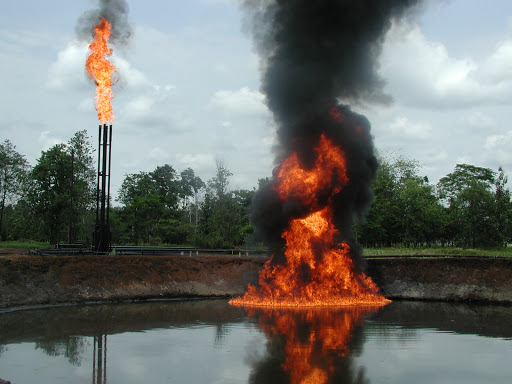
At a Hanukkah party in the midst of all this, we met two Americans working for Amazon Watch, an environmental/human rights advocacy organization based in San Francisco. After discussing the impacts that oil production has had on Amazonian communities and the need for current health data, they invited Oriana to join them on a tour of the affected areas with a group of delegates they brought down from the States. Below are some photos and description of the things we saw and learned on this fascinating and heartbreaking trip to the Oriente, Ecuador's Amazon basin. For more background, I highly recommend the documentary Crude (2009), the brief 60 Minutes segment Amazon Crude (2009), the Vanity Fair article Jungle Law (2007), and the beautifully written book Savages (1995) by Joe Kane.
The boom town of Lago Agrio, an oil camp founded in 1965 by Texaco and named after Sour Lake, Texas where the corporation had its start
From 1964-1990, Chevron (then Texaco) was contracted as the sole operator of oil exploration and extraction in Northeastern Ecuador(1). Through a devastating combination of American imperialism (see Confessions of an Economic Hit Man), dirty politics, environmental injustice, and social irresponsibility, thousands of square miles of biodiverse Amazon rainforest have been decimated, the traditional livelihood of multiple indigenous groups has been destroyed, and Ecuador has been left with massive foreign debt(1,2,3). In 1993, 30,000 settlers and indigenous people from the northern Oriente filed a class action suit against Chevron(1,6), and since then the corporation has gone to great lengths to evade responsibility for environmental clean-up that as the operations partner it would certainly be held liable for in the States(4, 12). The cost of remediation has been estimated at $27 billion, making it one of the largest environmental lawsuits in history. This figure includes investment in water, sewage, and healthcare infrastructure for the affected communities, but not individual damages(4).
Lago Agrio 1, Texaco’s first oil well in the Oriente, drilled in 1967 with equipment brought in by helicopter before roads were built. It was followed by 350 additional wells.
Transportes Petrolera (things have changed a bit since 1967).
When Chevron-Texaco left the Oriente in the 1990s, it abandoned more than 900 toxic waste pits(5). Crude oil, heavy metals, and toxic chemicals used in the extraction process were dumped in unlined, earthen pits, even though impermeable linings were required for waste pits in the States(1,6,12). Some of these pits were later "remediated" by Chevron (simply filled with dirt without removal of the toxic waste) in an attempt to avoid going to court(6,7,12). As oil production opened up roads in the area and colonists from other regions came looking for farmland, houses were built on top of some of these former waste dumps(6).
Lago Agrio 2 oil well. Note the small house in the background on the right, built on top of a former waste pit.
Donald takes a one-meter deep soil sample from a waste pit remediated by Texaco
The soil sample smells like a gas station
When mixed with water, crude oil separates from from the contaminated soil...
...and stains a latex glove
Many of Texaco's waste pits have been left open, and are now partially covered with superficial vegetation, but still leach toxins into the soil and drain contaminated water into nearby streams(6). The pits are not fenced, and livestock and children sometimes fall into the waste, suffering injury or death(7,12).
Donald stands on a log in an open waste pit now covered by ferns
A tar-like crude oil substance covers the surface of the pit
This open waste pit is approximately 3 meters deep, 20 x 30 meters in area
The waste pits were outfitted with gooseneck drain pipes, designed to allow excess water (contaminated with crude oil and industrial chemicals) to escape from the pits during heavy rains(6), which occur often in the Amazon.
Donald's right foot rests on a gooseneck overflow pipe in an open waste pit...
...which drains directly to a watershed
During its tenure in the Oriente, Chevron-Texaco intentionally dumped 18 billion gallons of toxic waste water into the Amazon rainforest and its waterways(5), even though waste water re-injection technology had already been developed(7,8) and was the industry standard by the 1970s(1,12). (In fact, Texaco itself obtained patents for reinjection technology in 1971 and 1974). These "production waters" exit the earth at high temperatures, containing large quantities of salt, heavy metals, and carcinogenic aromatic compounds that are harmful for human and aquatic life(1,10,12). By using antiquated technology in the Oriente, Chevron-Texaco managed to save whopping $3 per barrel of oil produced(12), at the expense of the health and well-being of thousands of people.
Former Texaco drilling site, now used by Petroecuador for reinjection of waste water into underground wells
This former waste pit is one of few being remediated by Petroecuador
An area more than 3 times the size of the original pit must be excavated to remove contaminated soil
In the oil production village of San Carlos near Coca, Ecuador, we spoke with Rosa Moreno, a nurse who runs the community health center. Because of airborne particulates and contaminated water sources, the residents of San Carlos suffer from high rates of childhood respiratory infections(9), increased cancer risk and mortality(10). The nearest cancer treatment center is in Quito, a 10-hour bus ride away (6,10).
Chevron claims that the Oriente is not contaminated. However, Rosa says that the many farmers in the area cannot sell their crops to other regions, much less export markets, because the community has been designated as a highly polluted zone (a big deal in a country with very few environmental regulations). Rosa has tried to donate blood, but is always refused because she lives in a contaminated region(9).
San Carlos Health Center
Indigenous groups such as the Cofán, Secoya, Siona, Huaorani, Shuar, Achuar, Shiwiar, and Kichwa, have lived sustainably in the Amazon for thousands of years(1,3); they depend on the forest for game, edible and medicinal plants, and on the rivers for fishing, bathing, and drinking water(10,11). Oil production in their homeland has thrust them abruptly into the industrial world, but has provided none of the necessary resources to adapt. They suffer the consequences of oil production, but see none of the profits.
Aguarico River, near the Cofán community of Dureno
Oil residue leaches from the ground into the Aguarico River
Cofán Dureno
Cofán community leader Emergildo Criollo tells us the story of Texaco’s arrival when he was a child
A Cofán man sells bow and arrow made from the Amazonian Chonta palm
Sunset outside Dureno
The pipeline these girls play on will eventually join the trans-Ecuadorian oil pipeline, which travels more than 300 miles from Lago Agrio in the Oriente, over the Andes at 13,000 feet to the coast in Esmeraldas(5,12). Chevron is responsible for 17 million gallons of crude oil spilled from ruptures in the pipeline (as compared to 11 million gallons spilled in the Exxon Valdez disaster) (2,3,5).
For our future visitors interested in learning more, "toxi-tours" of the areas affected by the oil industry can be arranged for the cost of a car and driver. Participants are simply asked to share what they have learned.
Our guide, Donald Moncayo, and his daughter Yasuní, named for a highly biodiverse nature reserve in the Ecuadorian Amazon that is currently at risk of oil development
References
(1) Chevron Toxico Campaign. 2010. Amazon Watch. http://chevrontoxico.com (2) Amnesty International USA. 2010. http://www.amnestyusa.org/business-and-human-rights/extractives/chevron-corp/page.do?id=1101670. (3) Kane, Joe. Savages. New York: Random House, 1995. (4) “Amazon Crude”. 60 Minutes. Draggan Mihailovich, Producer. CBS. 3 May 2009. (5) Kimerling, Judith, Ed. Amazon Crude. New York: National Resource Defense Council, 1991. (6) Crude. Joe Berlinger, Dir. First Run Features, 2009. (7) Moncayo, Donald. Personal interview. 7 Dec 2010. (8) USEPA. 2001 Subclass of Class V Underground Injection Control Wells. Title 40 of the Code of Federal Regulations (40CFR), sections 144.6 and 146.5. (9) Moreno, Rosa. Personal interview. 7 Dec 2010. (10) San Sebastián M, Armstrong B, Córdoba JA, Stephens C. Exposures and cancer incidence near oil fields in the Amazon basin of Ecuador. Occupational and Environmental Medicine. 2001: 58, 517-522. (11) Criollo, Emergildo. Personal interview. 6 Dec 2010. (12) Langeweische, William. “Jungle Law”. Vanity Fair. May 2007.
With my head spinning with all these data, I headed back to Quito, with a detour to Kunkuki to visit the Shuar community I worked with last summer. I received a warm welcome from the families and met with the primary school teacher to discuss plans for a botanical garden. Devin and I will go back to the community this weekend, starting off our Christmas vacation with some yard work. When the garden is complete it will be used to teach the students about native medicinal plants and traditional Shuar therapies and rituals. Eventually the teachers hope to cultivate enough plants to open a small pharmacy and serve nearby communities.
Remember this? Summer 2009.
It was a quick turnaround in Quito, as we had to jump on a Friday afternoon bus for an open water swim at San Pablo lake. Devin has managed to recruit nearly 30 kids for the swim team this year, triple the swimmers they had last year. (Realize that this is seriously impressive in a Latin American country where soccer season runs at the same time.) Eleven of the swimmers joined up for the San Pablo swim, a one-mile, cold water jaunt across a high mountain lake. Oriana took up safety kayak/photo duty.
Lago San Pablo, seen from Oriana's flight to the Amazon
Christmas break starts next week, and a road trip is in the works. In two adventurous, and hopefully somewhat relaxing weeks, we'll cover 3 of the 4 regions of Ecuador--sierra, oriente, costa. The Galapagos will have to wait until 2011. Have a happy new year and keep in touch!
Blanquita takes to the beach
More photos, more anecdotes for those who've made it this far...
A weekend trip to Yunguilla, Ecuador: turns out it's cloudy in the cloud forest
Bromeliads in Yunguilla, a community-run eco-tourism destination just one hour from Quito
DandO ride the tarabita cable car over the Mindo River, 500 feet above the cloud forest
O crosses a rickety jungle bridge on her way to a waterfall outside Mindo
Devin almost walked right into this lovely lady on the trail!
No waves! Apparently Thanksgiving was a bit early in the season for both surf and sun
Would be pretty fun with a bit of swell...
...but the fishing was good
Los pescaderos fill up this fish truck and take it straight to our favorite restaurant
Devin attempts to save an enormous blowfish left behind by the fishermen. It didn’t work. We think Barbie bit the dust somewhere around the 17th somersault on his way back to the sea.
This is the place for a Thanksgiving feast!
Encocado: seafood stewed in coconut milk. Better than turkey!
This was definitely preferable to being house-bound in Quito on census day
Oriana gets to work on her beer belly
our cozy little bungalow on the beach
Las fiestas de Quito, Desfile de la Confraternidad: a 3-hour parade we had to battle our way across on the way to the bullfight
Plaza de los Toros. Goofy Panama hats (made in Ecuador) mandatory.
Second to last row, not a bad seat in the house. And yes, that is carnage reflected in my sunnies.
We were the in-flight entertainment
El Fandi. El Loco.
Liga final at la Casa Blanca, end zone seats behind the “White Death”fans
Visiting Emelec fans go wild with road flares. (And we wonder why no flares are available for auto accidents).
Ay Cayambe! The world's highest point on the equator
We've purchased a phone number in Oakland which, through the magic of Skype and the power of the Internet, will connect you to our home in Quito. No worries about crazy international phone rates; it's just like a call to California. Pick up your cell and give us a ring!
Ecuador
click to enlarge
¡Mas Fotos!
We`re slowly but surely uploading photos to our Flickr page. Click Here